Migrations to Adobe Customer Journey Analytics (CJA) and Adobe Experience Platform (AEP) are some of the most complex data transformations marketing and analytics teams will ever undertake.

As we covered in our previous post, Maximizing Value with Adobe Customer Journey Analytics, success in CJA starts with one foundational truth: data quality isn’t optional.  It’s everything.

But what that post didn’t cover is where things get especially risky: the migration itself.

Across enterprise implementations, a consistent pattern emerges.  CJA and AEP migrations introduce a critical data quality blind spot that traditional QA simply can’t close.

The Hidden Risk in Every Migration

Most implementation partners bring a detailed project plan: timelines, milestones, deliverables.

But there’s a gap most teams overlook:

Does your data quality plan match your migration plan?

In the strongest implementations, Sentinel Insights isn’t brought in after something breaks.  It’s embedded from the very beginning as part of the proposed solution.

In one example, a leading mutual fund company’s implementation partner (a marketing agency) formally included Sentinel as the QA and governance layer in their migration proposal. This meant:

  • Data quality monitoring
  • WebSDK validation
  • Consent governance
  • Regression testing

All scoped before deployment even began.

That shift from reactive to proactive is what separates successful migrations from costly ones.

Where Migrations Actually Break

1. The Dual-Run Period Is the Riskiest Window

During migrations from Adobe Analytics to WebSDK, teams often run parallel implementations to validate parity.

On paper, this looks controlled. In practice, it’s where critical issues hide.

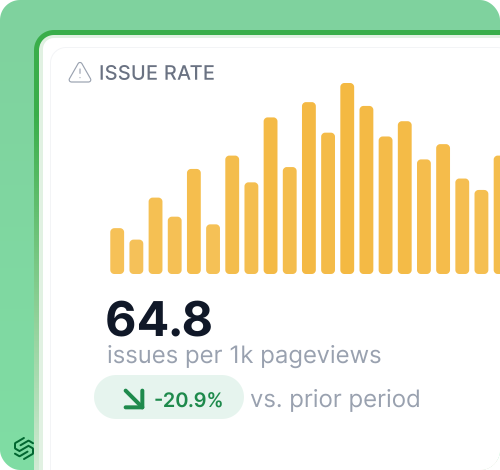
In one case, the Analytics Architect discovered after go-live that SDK calls were not firing on key pages including the homepage, resulting in a ~75% drop in data volume.

Key takeaways:

  • The root cause analysis was invisible in Adobe Analytics UI
  • It was only detected through real-user monitoring
  • Sentinel enabled side-by-side payload validation

This led to new alerting thresholds and a formalized QA process built around continuous validation.  The exact quote from the architect, “Sentinel is the only tool that captures full payloads.”

2. Platform Changes Introduce Invisible Breakage

Migrations often coincide with CMS upgrades, tagging changes, or cloud transitions.

During an AEM cloud migration, a Director of Analytics at a leading mutual fund company used Sentinel to:

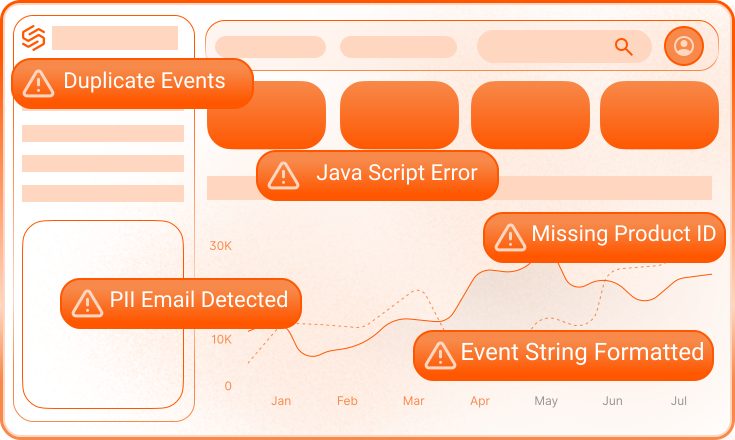
  • Surface JavaScript errors impacting data collection
  • Validate analytics parity to within ~3% of Adobe Analytics
  • Export detailed datasets for faster troubleshooting

The consistent feedback:  Sentinel’s exports and data visibility were “super helpful.”

Without this level of visibility, many issues would have gone undetected until much later when they’re far more expensive to fix.

3. Consent Isn’t Just Compliance.  It’s a Data Pipeline Risk

With AEP, consent failures don’t just create compliance issues.  They directly impact data quality and activation.  

In one implementation, Sentinel uncovered:

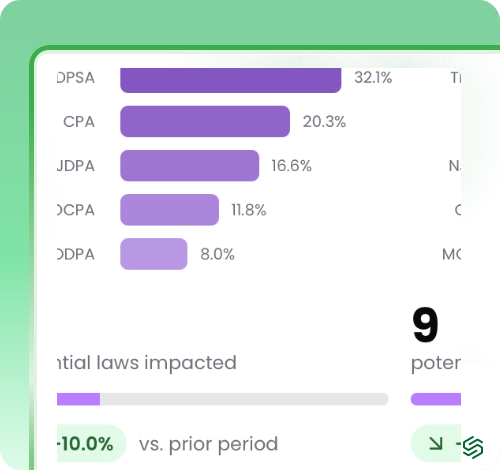
  • Due to misconfigured consent enforcement in the CMP and tag management layer, performance and functional tags fired despite user opt-outs
  • Issues not visible in CMP or tag management tools
  • No prior automated detection mechanism

Sentinel provided:

  • Audit-ready exports
  • Clear evidence for investigation
  • Ongoing monitoring to prevent recurrence

If not properly governed through AEP data governance policies and consent enforcement, bad data can flow into profiles and downstream activation.

In another case, Sentinel identified unexpected PII exposure in API calls, surfacing risks teams didn’t know existed.

4. Migration QA Doesn’t End at Go-Live

QA is not a phase but an ongoing discipline.

Post-migration, teams using Sentinel have seen:

  • 12-40 hours/month saved via automated pixel monitoring
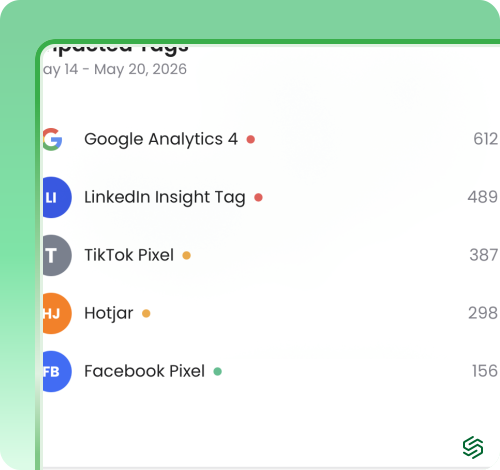
  • Continuous validation across every tag such as Google Ads, Meta/Facebook, LinkedIn, and more
  • Immediate detection of regressions after releases

As one Director of Analytics put it, “A single missed conversion pixel or consent issue can cost more than the annual contract.”

Some teams have gone further by embedding Sentinel directly into their release pipeline as an always-on validation layer.

5. Alerts Are Good. Evidence Is Better.

Most tools tell you something is wrong. Few tell you why.

Sentinel provides full payload-level visibility, enabling teams to:

  • Identify anomalies such as:
    • Missing localStorage values
    • Multiple user agents tied to a single ECID
    • Browser edge cases
  • Reduce unnecessary data volume and costs

In AEP-based architectures, data flows from WebSDK → Edge Network → AEP ingestion → datasets → profile store. Breakage can occur at any stage, but most migration issues originate at the client-side collection layer.

Sentinel Insights gives teams something critical during migrations: A factual, defensible basis for diagnosis and not just a notification that something broke.

The Takeaway: Migration Is the Starting Line

CJA and AEP migrations aren’t just implementation projects. They redefine your data foundation.

The teams that succeed treat data quality as a core workstream from day one, not a post-launch fix.

Sentinel Insights supports this by providing:

  • Real-user monitoring across the full migration lifecycle
  • Continuous validation of WebSDK such as XDM schema validation
  • Consent enforcement monitoring for AEP
  • Campaign and attribution data validation
  • Ongoing regression detection

Ready to Protect Your Migration?

If you’re planning or currently in a CJA or AEP migration, ask yourself:

Do you have visibility into what’s actually happening in production?

If not, let’s talk.

And if you’re just getting started, revisit our guide on Maximizing Value with Adobe Customer Journey Analytics to ensure your foundation is ready.