The Privacy and Security Forum Fall 2025 conference highlighted how quickly privacy expectations are shifting. Across sessions on AI, digital trust, state legislation, and tracking technologies, speakers returned to a common theme: policies alone do not reduce risk. Organizations need verifiable evidence that privacy controls are operating as intended.

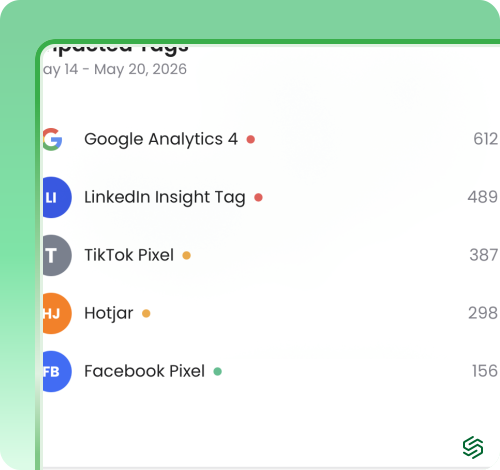
Sentinel Insights has long held a clear point of view. The challenge is not consent collection. The challenge is consent governance at scale. Multiple sessions reinforced this reality over the course of the conference, especially the repeated acknowledgment that most teams still cannot see how tags behave for real users.

AI, Data Portability, and the Expanded Surface Area of Risk

Speakers described how emerging AI systems combine browsing activity, communications data, location information, and behavioral signals into complex data flows. These flows are often difficult to audit and even harder to match against user consent choices.

Several presenters emphasized the growing pressure for transparency around AI training and data reuse. Without clarity on what data feeds into downstream systems, AI adoption increases operational privacy risk. Many noted that organizations frequently mis-model these flows because of automated link tracking, piggybacking, and vendor defaults that introduce behaviors teams never configured.

There was also discussion around increased data-sharing activity across federal programs. Regardless of sector, the message was consistent: organizations need a clear, validated understanding of how their own systems move data before those patterns are amplified by AI models or automated processes.

Digital Trust Is Becoming a Business Benchmark

A session led by Orrick referenced broader industry work, including frameworks published by groups such as the World Economic Forum, that are shaping how organizations evaluate digital trust. Speakers noted that trust signals – how a company explains its data use and responds to user requests – now influence customer decisions in measurable ways.

One enterprise shared its approach to handling large volumes of access requests and the internal coordination required to achieve consistent response times. The takeaway was not the specific numbers, but the level of operational structure needed to deliver predictable, audit-ready outcomes.

Why Verifiable Systems Matter for Trust

  • What data they collect
  • Why they collect it
  • How consent is validated
  • How tag and vendor behavior aligns with those choices

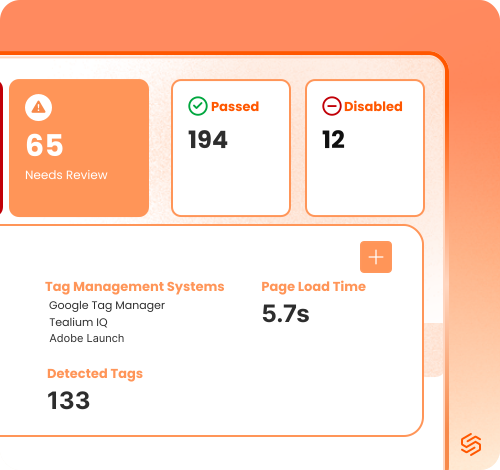
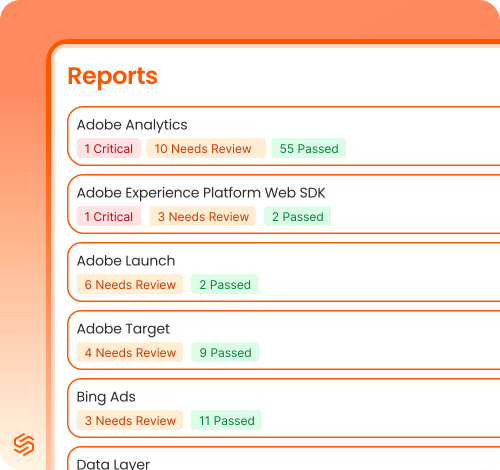
Verification replaces assumptions with facts. And, as several presenters emphasized, traditional cookie audits and periodic scans only surface a fraction of real behavior. Real users trigger flows and edge cases scripted scanners never encounter – a point privacy engineers at the conference reinforced repeatedly.

In an environment where consumers are cautious about AI and cross-site tracking, this level of transparency supports long-term reputation and retention.

U.S. State Privacy Laws Are Converging on Minors’ Data and Sensitive Data

Multiple speakers discussed how states such as Colorado, Connecticut, Texas, and New York are tightening requirements around minors’ data and sensitive information. Several regulators described increased coordination efforts, particularly when investigating high-impact incidents.

One speaker highlighted the “iceberg” effect of privacy events. Penalties are visible, but the operational disruption, legal preparation, and reputational impact often carry far greater long-term cost – especially when teams must reconstruct data flows they never had visibility into.

CCPA Rulemaking and State Bills Signal Another Active Year

Several sessions referenced anticipated CCPA regulatory activity, including potential updates related to deletion rights and opt-out preference signal requirements. New Jersey’s proposed rules on AI training attracted significant attention. Other states, including Massachusetts, Pennsylvania, and New York, continue to evaluate privacy proposals or amendments to existing laws.

Even absent new laws in 2025, stakeholders emphasized that amendments, rulemaking, and enforcement priorities can materially change organizational obligations. This dilemma can be described as “visibility debt” – the growing gap between what teams think their systems are doing and how those systems actually behave.

Tracking Technologies Reveal Where Policies Break Down

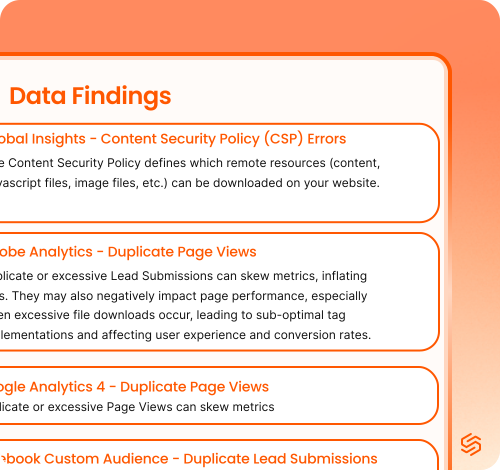
More than four sessions focused on tracking technologies, wiretapping claims, and the risks associated with uncontrolled scripts on websites. A common observation was that even well-configured CMPs can fail to prevent unauthorized trackers, because this is not what CMPs were designed to do. Technical contributors pointed to causes such as:

  • Vendor updates
  • Hidden piggybacking
  • Hardcoded pixels that bypass tag managers
  • Misalignment between CMP categories and actual tag purpose
  • Legacy scripts left behind after site changes

Several speakers stressed that these issues rarely stem from negligence. They come from automation, vendor updates, and architectural drift happening behind the scenes. Privacy breaks down where policy and architecture diverge – especially when no one is validating execution with real users.

Organizations need real-time visibility into how scripts behave, how data flows shift, and whether user choices are enforced in practice.

Where Enterprises Go From Here

The Forum reinforced how privacy programs are evolving. Legal teams, privacy officers, and engineers now share responsibility for enforcing privacy decisions, but they cannot meet that responsibility without systems that show what is happening behind the scenes.

Verifiable governance provides that clarity. It replaces assumptions with evidence. It enables cross-functional alignment. And it allows enterprises to respond confidently to audits, demands, and changes in state law.

Regulators are actively reviewing websites and testing for gaps. If you want to understand how your website is handling consent, privacy, and data quality:

Run a free scan
Book a verification call