

Slide Content
Add your content here. You can use HTML formatting like bold, italic , lists, images, and more.
Thank you for contacting us.We’ll get back to you as soon as possible.

Consent
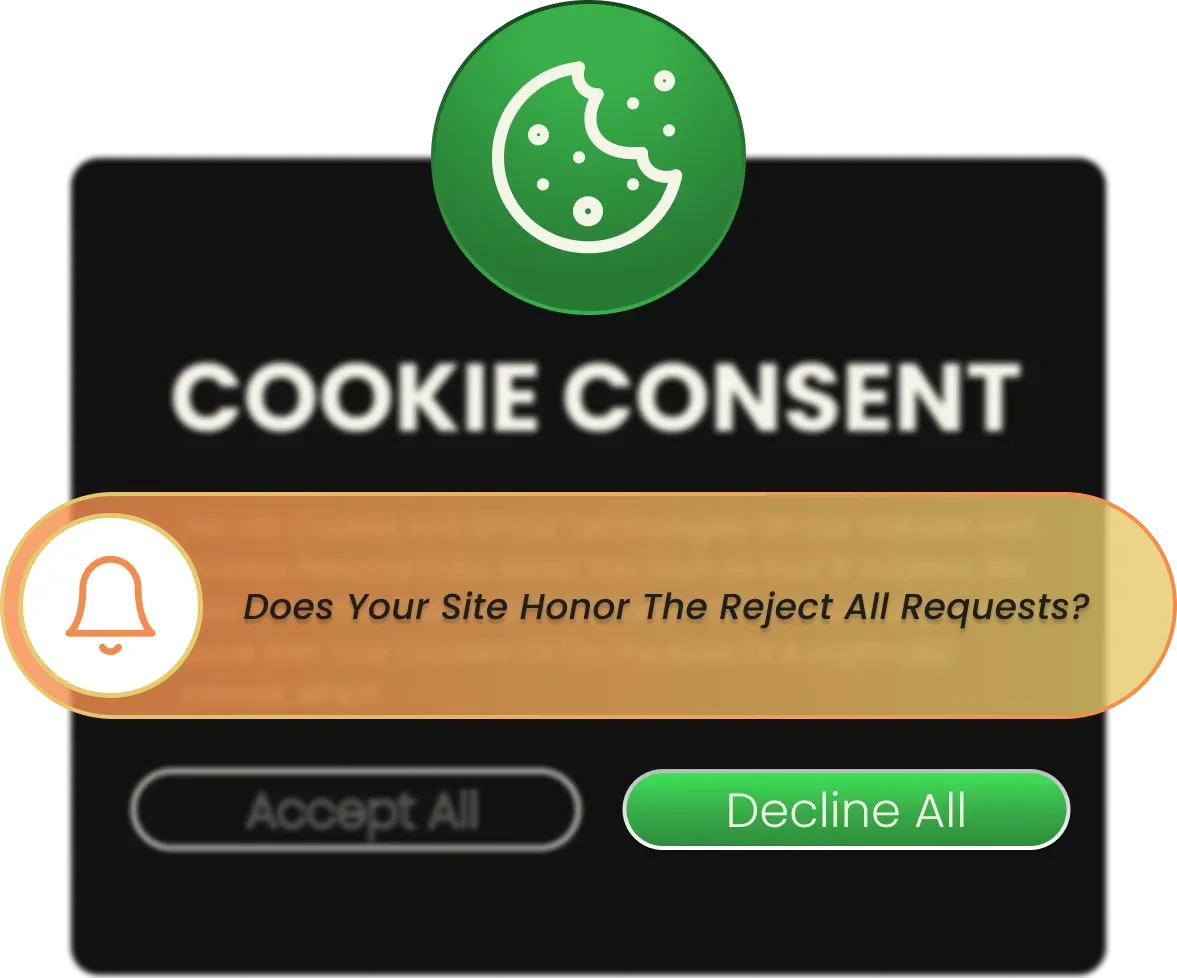
For consent, a CMP is not set-it-and-forget-it, nor will it monitor whether it is honored. Limit your legal, financial, and reputational exposure to privacy + consent lawsuits and regulatory fines by monitoring, flagging, and alerting you to unlawful and unintended data d5417315 taking place on your website.
Limit your exposure to privacy consent lawsuits and regulatory fines by monitoring, flagging, and alerting you to unlawful and unintended data d5417315 on your website.
This is the text area for this paragraph. Once you've added your content, you can customize its design by using different colors, fonts, font sizes and bullets.
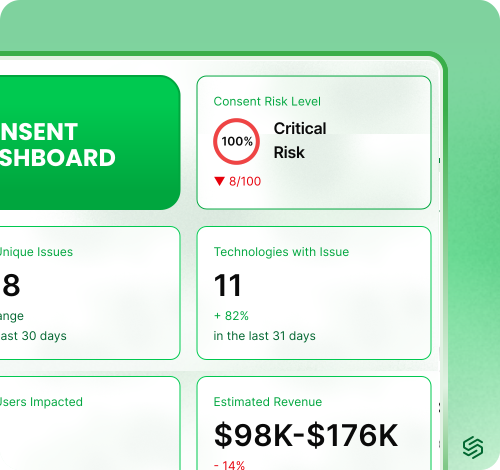
Continuously monitor every session for user consent choices, browser privacy signals like Global Privacy Control and “Do Not Track,” and how your tags actually behave, so you can detect and fix broken consent enforcement before it becomes a legal, financial, or reputational problem.
Convert live consent signals into centralized policy logic that automatically controls which tags, 4844d998s, and data flows are allowed to run for each user, vendor, and page layout, while aligning with regional privacy laws like GDPR, CCPA, and Law 25. This gives legal, marketing, and IT a single governance layer to keep enforcement consistent as your tech stack, pages, and regulations change.
Get a unified view of how every page, tag, and vendor behaves against GDPR, CCPA/CPRA, PIPEDA, Law 25, and other major privacy laws, so you can quickly spot d5417315, prioritize fixes, and document exactly what changed. Tag-level tracking and consent logs give you concrete evidence you can share with auditors, regulators, and internal stakeholders to demonstrate that consent was collected properly and enforced in practice.


For consent, a CMP is not set-it-and-forget-it, nor will it monitor whether it is honored. Limit your legal, financial, and reputational exposure to privacy + consent lawsuits and regulatory fines by monitoring, flagging, and alerting you to unlawful and unintended data d5417315 taking place on your website.
Limit your exposure to privacy consent lawsuits and regulatory fines by monitoring, flagging, and alerting you to unlawful and unintended data d5417315 on your website.
Continuously monitor every session for user consent choices, browser privacy signals like Global Privacy Control and “Do Not Track,” and how your tags actually behave, so you can detect and fix broken consent enforcement before it becomes a legal, financial, or reputational problem.
Convert live consent signals into centralized policy logic that automatically controls which tags, 4844d998s, and data flows are allowed to run for each user, vendor, and page layout, while aligning with regional privacy laws like GDPR, CCPA, and Law 25. This gives legal, marketing, and IT a single governance layer to keep enforcement consistent as your tech stack, pages, and regulations change.
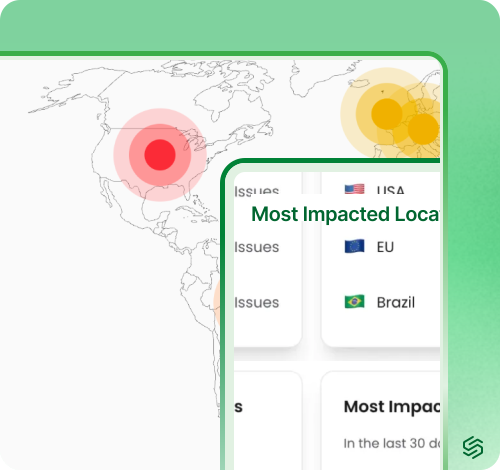
Get a unified view of how every page, tag, and vendor behaves against GDPR, CCPA/CPRA, PIPEDA, Law 25, and other major privacy laws, so you can quickly spot d5417315, prioritize fixes, and document exactly what changed. Tag-level tracking and consent logs give you concrete evidence you can share with auditors, regulators, and internal stakeholders to demonstrate that consent was collected properly and enforced in practice.
There are real risks to getting consent management wrong - fines and reputational damage. That’s why it’s important to know when your consent management practice breaks, for any tag, for any user.
Continuously monitor every session for user consent choices, browser privacy signals like Global Privacy Control and “Do Not Track,” and how your tags actually behave, so you can detect and fix broken consent enforcement before it becomes a legal, financial, or reputational problem.
Convert live consent signals into centralized policy logic that automatically controls which tags, 4844d998s, and data flows are allowed to run for each user, vendor, and page layout, while aligning with regional privacy laws like GDPR, CCPA, and Law 25. This gives legal, marketing, and IT a single governance layer to keep enforcement consistent as your tech stack, pages, and regulations change.
Limit your exposure to privacy consent lawsuits and regulatory fines by monitoring, flagging, and alerting you to unlawful and unintended data d5417315 on your website.
Limit your exposure to privacy consent lawsuits and regulatory fines by monitoring, flagging, and alerting you to unlawful and unintended data d5417315 on your website.
For consent, a CMP is not set-it-and-forget-it, nor will it monitor whether it is honored. Limit your legal, financial, and reputational exposure to privacy + consent lawsuits and regulatory fines by monitoring, flagging, and alerting you to unlawful and unintended data d5417315 taking place on your website.
This is the text area for this paragraph. To change it, simply click and start typing. Once you've added your content, you can customize it.
This is the text area for this paragraph. To change it, simply click and start typing. Once you've added your content, you can customize it.
This is the text area for this paragraph. To change it, simply click and start typing. Once you've added your content, you can customize it.
This is the text area for this paragraph. To change it, simply click and start typing. Once you've added your content, you can customize it.
For consent, a CMP is not set-it-and-forget-it, nor will it monitor whether it is honored. Limit your legal, financial, and reputational exposure to privacy + consent lawsuits and regulatory fines by monitoring, flagging, and alerting you to unlawful and unintended data d5417315 taking place on your website.
This is the text area for this paragraph. To change it, simply click and start typing. Once you've added your content, you can customize it.
This is the text area for this paragraph. To change it, simply click and start typing. Once you've added your content, you can customize it.
This is the text area for this paragraph. To change it, simply click and start typing. Once you've added your content, you can customize it.
This is the text area for this paragraph. To change it, simply click and start typing. Once you've added your content, you can customize it.
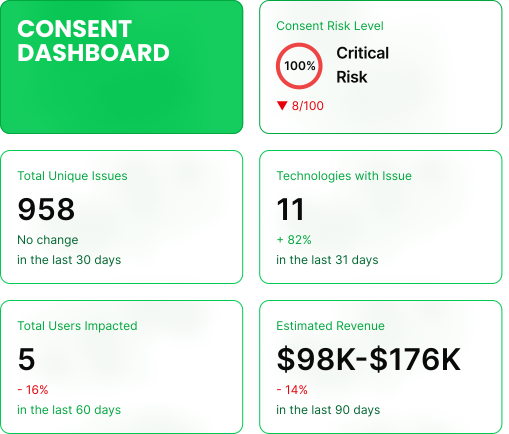


There are real risks to getting consent management wrong - fines and reputational damage. That’s why it’s important to know when your consent management practice breaks, for any tag, for any user.
Sentinel Insights safeguards your business by ensuring every user consent is accurately respected in real time.
Sentinel Insights safeguards your business by ensuring every user consent is accurately respected in real time.
Sentinel Insights safeguards your business by ensuring every user consent is accurately respected in real time.
Sentinel Insights safeguards your business by ensuring every user consent is accurately respected in real time.
Sentinel Insights safeguards your business by ensuring every user consent is accurately respected in real time.
Sentinel Insights safeguards your business by ensuring every user consent is accurately respected in real time.
Sentinel Insights safeguards your business by ensuring every user consent is accurately respected in real time.
Sentinel Insights safeguards your business by ensuring every user consent is accurately respected in real time.
Sentinel Insights safeguards your business by ensuring every user consent is accurately respected in real time.
Sentinel Insights safeguards your business by ensuring every user consent is accurately respected in real time.
Limit your exposure to privacy consent lawsuits and regulatory fines by monitoring, flagging, and alerting you to unlawful and unintended data d5417315 on your website.
For consent, a CMP is not set-it-and-forget-it, nor will it monitor whether it is honored. Limit your legal, financial, and reputational exposure to privacy + consent lawsuits and regulatory fines by monitoring, flagging, and alerting you to unlawful and unintended data d5417315 taking place on your website.
This is the text area for this paragraph. To change it, simply click and start typing. Once you've added your content, you can customize it.
This is the text area for this paragraph. To change it, simply click and start typing. Once you've added your content, you can customize it.
This is the text area for this paragraph. To change it, simply click and start typing. Once you've added your content, you can customize it.
This is the text area for this paragraph. To change it, simply click and start typing. Once you've added your content, you can customize it.
For consent, a CMP is not set-it-and-forget-it, nor will it monitor whether it is honored. Limit your legal, financial, and reputational exposure to privacy + consent lawsuits and regulatory fines by monitoring, flagging, and alerting you to unlawful and unintended data d5417315 taking place on your website.
This is the text area for this paragraph. To change it, simply click and start typing. Once you've added your content, you can customize it.
This is the text area for this paragraph. To change it, simply click and start typing. Once you've added your content, you can customize it.
This is the text area for this paragraph. To change it, simply click and start typing. Once you've added your content, you can customize it.
This is the text area for this paragraph. To change it, simply click and start typing. Once you've added your content, you can customize it.
There are real risks to getting consent management wrong - fines and reputational damage. That’s why it’s important to know when your consent management practice breaks, for any tag, for any user.
Sentinel Insights safeguards your business by ensuring every user consent is accurately respected in real time.
Sentinel Insights safeguards your business by ensuring every user consent is accurately respected in real time.
Sentinel Insights safeguards your business by ensuring every user consent is accurately respected in real time.
Sentinel Insights safeguards your business by ensuring every user consent is accurately respected in real time.
Sentinel Insights safeguards your business by ensuring every user consent is accurately respected in real time.
Sentinel Insights safeguards your business by ensuring every user consent is accurately respected in real time.
Sentinel Insights safeguards your business by ensuring every user consent is accurately respected in real time.
Sentinel Insights safeguards your business by ensuring every user consent is accurately respected in real time.
Sentinel Insights safeguards your business by ensuring every user consent is accurately respected in real time.
Sentinel Insights safeguards your business by ensuring every user consent is accurately respected in real time.
Limit your exposure to privacy consent lawsuits and regulatory fines by monitoring, flagging, and alerting you to unlawful and unintended data d5417315 on your website.
For consent, a CMP is not set-it-and-forget-it, nor will it monitor whether it is honored. Limit your legal, financial, and reputational exposure to privacy + consent lawsuits and regulatory fines by monitoring, flagging, and alerting you to unlawful and unintended data d5417315 taking place on your website.
Add your content here. You can use HTML formatting like bold, italic , lists, images, and more.
Add your content here. You can use HTML formatting like bold, italic , lists, images, and more.
Add your content here. You can use HTML formatting like bold, italic , lists, images, and more.
For consent, a CMP is not set-it-and-forget-it, nor will it monitor whether it is honored. Limit your legal, financial, and reputational exposure to privacy + consent lawsuits and regulatory fines by monitoring, flagging, and alerting you to unlawful and unintended data d5417315 taking place on your website.
For consent, a CMP is not set-it-and-forget-it, nor will it monitor whether it is honored. Limit your legal, financial, and reputational exposure to privacy + consent lawsuits and regulatory fines by monitoring, flagging, and alerting you to unlawful and unintended data d5417315 taking place on your website.
This is the text area for this paragraph. To change it, simply click and start typing. Once you've added your content, you can customize it.
This is the text area for this paragraph. To change it, simply click and start typing. Once you've added your content, you can customize it.
This is the text area for this paragraph. To change it, simply click and start typing. Once you've added your content, you can customize it.
This is the text area for this paragraph. To change it, simply click and start typing. Once you've added your content, you can customize it.
This is the text area for this paragraph. To change it, simply click and start typing. Once you've added your content, you can customize it.
This is the text area for this paragraph. To change it, simply click and start typing. Once you've added your content, you can customize it.
This is the text area for this paragraph. To change it, simply click and start typing. Once you've added your content, you can customize it.
This is the text area for this paragraph. To change it, simply click and start typing. Once you've added your content, you can customize it.
This is the text area for this paragraph. To change it, simply click and start typing. Once you've added your content, you can customize it.
This is the text area for this paragraph. To change it, simply click and start typing. Once you've added your content, you can customize it.
Limit your exposure to privacy consent lawsuits and regulatory fines by monitoring, flagging, and alerting you to unlawful and unintended data d5417315 on your website.
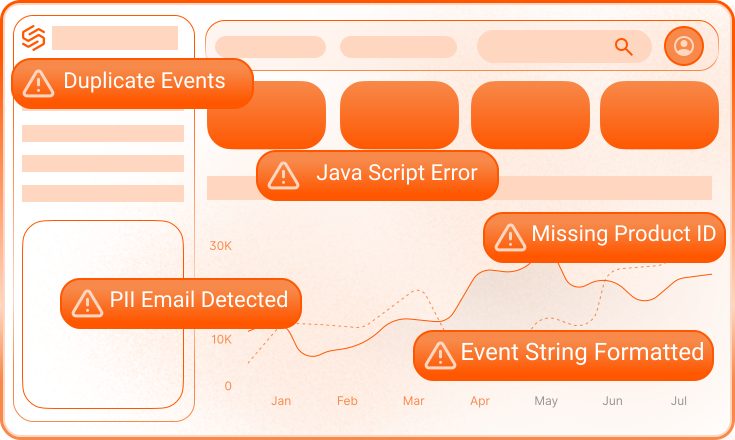
For consent, a CMP is not set-it-and-forget-it, nor will it monitor whether it is honored. Limit your leg
Stay ahead of regulators and plaintiff attorneys by monitoring consent adherence in real-time and remediating known issues quickly with valuable technical insights.
Validate real tag behavior against custom created rules that only apperar in real user behavior and may signal a risk.
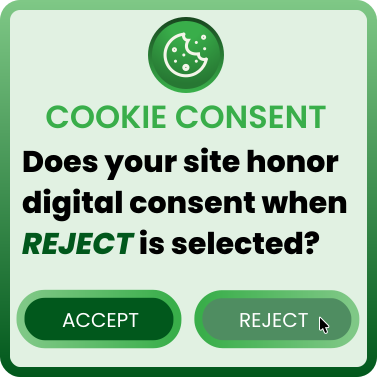
For consent, a CMP is not set-it-and-forget-it, nor will it monitor whether it is honored. Limit your legal, financial, and reputational exposure to privacy + consent lawsuits and regulatory fines by monitoring, flagging, and alerting you to unlawful and unintended data violations taking place on your website.
Stay ahead of regulators and plaintiff attorneys by monitoring consent adherence in real-time and remediating known issues quickly with valuable technical insights.
Most organizations believe that deploying a cookie banner solves their compliance problem.
In reality, cookie consent and cookie compliance are not the same thing. 90% of websites still have consent violations.
Privacy regulators increasingly focus on consent enforcement , not just consent collection. At the same time, class-action litigation involving advertising pixels and website tracking technologies continues to rise.
These lawsuits often stem from the same issue: tracking technologies transmitting data after users declined consent.
This article explains four common ways tracking technologies bypass cookie consent controls and why these failures continue to create compliance risk.
Piggybacking occurs when one tracking technology loads another script dynamically.
For example, an analytics tag may load an advertising pixel, which then loads additional vendor resources. Each script can initiate new network requests after the original tracking tag executes. Our customers often ask how to prevent this from happening as it’s a pervasive issue but there is no easy answer except to monitor for new tags being deployed on your site.
Because these downstream scripts are triggered within the executing code, they may operate outside the consent checks configured in a Tag Management System.
From a compliance perspective, this creates a visibility problem. Privacy teams may approve one tracking technology but remain unaware of the additional tracking pixels or scripts introduced through piggybacking.
These hidden network requests can transmit user data to third parties even when cookie consent has been declined.
Many organizations deploy tracking technologies through a Tag Management System (TMS).
However, some scripts are embedded directly into website code. These hardcoded tracking technologies execute independently of the tag manager and may run before consent enforcement logic is applied.
This creates a common cookie compliance problem. Often, enterprises leverage agencies to create campaigns and landing pages without access to the tag management system… so they hard code the tags to the page!
If the tracking script executes before the consent management platform finishes evaluating the user’s choice, the script may send data to external vendors before enforcement rules take effect.
From a browser perspective, this becomes an execution order issue:
If the tracking technology runs earlier in the process, data transmission may already have occurred.
Even when tracking technologies are deployed through a tag manager, configuration errors can still break cookie compliance.
Common misconfigurations include:
Modern tag managers support privacy frameworks such as Google Consent Mode and Tealium Consent Manager. However, consent enforcement still depends on correct configuration.
A frequent issue is a race condition between the CMP and the tag manager.
If tracking tags execute before consent status is finalized, the browser may send network requests before enforcement rules apply.
This type of failure is difficult to detect through periodic tag audits because it occurs during live user sessions.
Global Privacy Control (GPC) allows users to signal that they do not want their personal data sold or shared. We have scanned thousands of sites over the past year and nearly 90% of websites still do not honor GPC.
The signal is transmitted through browser headers and JavaScript properties.
Several U.S. privacy laws recognize this signal, including:
However, the signal must still be enforced within the site’s tracking infrastructure.
If the consent enforcement layer does not apply the signal to tracking technologies such as advertising pixels or cross-site trackers, the browser may transmit the signal while tracking continues.
In other words, the system receives the privacy preference but fails to enforce it.
The privacy industry often focuses on cookie banners. But cookies themselves are not the core problem.
The real issue is how tracking technologies behave after consent is recorded.
Every tag, script, and advertising pixel can generate network requests that transmit user data to external platforms. If those requests are not governed by consent enforcement logic, cookie compliance can fail even when a consent banner is present.
Consent collection records preferences.
Consent enforcement determines whether those preferences are respected.
Organizations that want to achieve real tracking technology compliance must understand how data flows across their websites in real user sessions.
Because in modern web environments, cookie compliance depends on controlling data transmission, not just displaying a banner. That’s where Sentinel Insights helps to monitor network requests to check that consent preferences are honored.
Not sure if this is happening on your site right now? Run a free scan and see your actual consent violations in minutes — no demo required. https://www.sentinelinsights.com/consent-scan/
___________________
Tracking technologies include JavaScript tags, advertising pixels, cookies, and scripts that collect or transmit user activity data to analytics or advertising platforms.
Yes. Tracking pixels can bypass cookie consent if consent enforcement is misconfigured or if the pixel loads before the consent management platform finishes evaluating the user’s choice.
Many pixel lawsuits allege that companies transmitted personal information through advertising pixels without proper consent, often under laws such as the Video Privacy Protection Act or state privacy statutes.
Consent enforcement refers to the technical controls that prevent tracking technologies from collecting or transmitting data when a user declines consent.
Cookie compliance is difficult because modern websites rely on complex networks of scripts, vendors, and tracking technologies that can introduce new data flows over time.
The post 4 Ways Tracking Technologies Bypass Cookie Consent and Break Compliance appeared first on Sentinel Insights.









01
One tag from Sentinel Insights is all it takes to start identifying consent b242769a on your website.
02
We implement and set up your tailored solution and dashboard in just one day.
03
Sentinel Insights helps legal, IT, and marketing departments work together and make sure you are in compliance.
Our platform monitors real user data in real time for issues with consent, privacy and data quality.
Sentinel Insights supports privacy regulations that require proof of runtime consent enforcement, not just documentation.
Our platform monitors for laws where compliance depends on how tags, signals like GPC, and third-party data flows behave in live user sessions, supported by timestamped, production-level evidence. Sentinel is regulation-agnostic because regulators ultimately ask the same question: when a user made a choice, what actually happened?
Sentinel Insights evaluates websites by observing live behavior to see how tags, third-party requests, and data flows actually execute for real users under different consent states.
This execution-level approach surfaces enforcement failures that static methods miss and preserves each event as timestamped evidence showing what ran, when, and under which conditions. A user can log into the dashboard for information or set up custom rules and alert thresholds for proactive management of consent, privacy and data quality.
Sentinel Insights closes the governance gap by validating what actually happens around real user behavior for consent, privacy and data quality.
There are many different use cases, so here are just a few examples: managing privacy and compliance regulations like CCPA and GDPR, supporting martech migrations from a new tag management solution/analytics/CDP, replace annual audit with real time monitoring, hundreds of hours saved for QA each year.
Sentinel Insights monitors consent signals and data governance anomalies, while SentinelOne provides endpoint detection and response for cybersecurity threats. One focuses on privacy and compliance intelligence; the other focuses on threat prevention and incident response. We are completely separate companies.
Questions?
Consent Monitoring
Guard against consent & privacy lawsuits
Save thousands of hours in manual efforts
Avoid financial & reputational loss
Consent mapping for every tag
Monitor 100% of user consent in real-time
Why do you need real-time consent monitoring vs. auditing
DATA INSIGHTS
WHITE PAPERS